

Dupuis has been Alameda’s CIO since 2012, having served as its chief technology officer for 12 years before that. Gurney, meanwhile, joined the county as the assistant CIO in 2012, coming from the private sector.

While one might expect pandemonium to accompany the announcement that both are leaving on the same day — March 27 — the pair explained that there are protocols in place and an organizational culture that will keep the pace long after they’ve started traveling the world.
Gurney noted that if a replacement for Dupuis is not selected from the more than 160 resumes by the end of March, an interim leadership structure is in place to fill the gaps.
Both take enormous pride in the team they lead, which is made up of roughly 230 employees.
“We're very happy to be able to take credit for all the good work that they're doing, but really at this point, our teams are so mature and they're doing such great work that I totally expect them to carry on and continue to do the good work that you've heard from us, in our awards and the things that we talk about at the conferences. I expect that to continue,” Dupuis said.
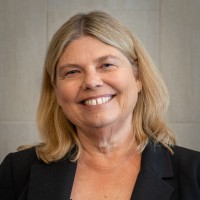
What’s perhaps most impressive about ITD is that it operates under a decentralized model, and yet, the majority of the 10,000 or so endpoints that make up the regional government’s network are managed by ITD.
For context, when Dupuis and Gurney took over in 2012, only around 1,700 endpoints were being managed. Today, that number stands somewhere between 7,500 and 8,000 endpoints and is steadily climbing.
“When I came to Alameda County, one of the things I liked about the way it was being run here is that it was being run like a private company,” Dupuis said.
This growth isn’t due to a mandate or policy; it’s the result of extensive relationship building and proving to the 20 other county business units that there are better ways to do things, the CIO said.
“We don't take general fund money; there is no general fund money that makes us work. So, we have to, like a private company, prove that we can do our business faster, better and cheaper than everybody else,” he added.
Gurney noted that excellent employee retention rates with ITD have created an environment where developers understand the business of the partner departments while simultaneously becoming experts in niche aspects of the work that can range from criminal justice and health data to the ins and outs of day-to-day operations.
“Sometimes our teams know the systems and processes better than the businesses do, because they're in it day in and day out,” she said.
Like the retention seen at the employee level, Dupuis and Gurney said the department’s relationships with vendors tend to stretch on for the long term as well.
“I think where those relationships become really important is that it can be very easy to get yourself stuck in your bubble and stuck in the world that we are living in with the particular government entity that you're in and not see that there's a different way of doing business,” Dupuis said of the importance of expanding relationships in government and the private sector.
As for what’s next for the pair, don’t expect them to jump into a new role anytime soon. Dupuis said he will be making up for lost travel time with his wife, with trips to places such as Panama and Europe planned through 2027. Gurney, meanwhile, has some travel plans of her own that include Spain and an expedition to Antarctica.
“We're just going to see where retirement takes me. It'll be interesting,” Gurney said.







